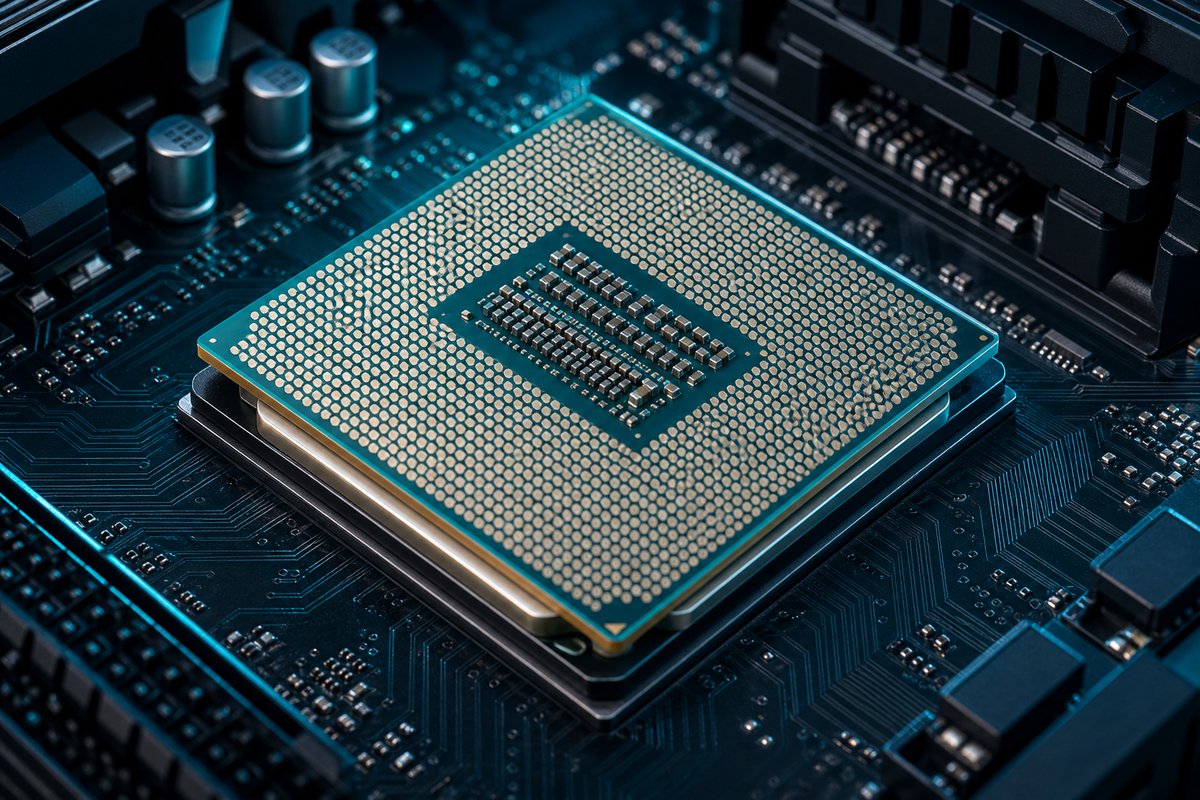
Performance benchmarks are the shared vocabulary of engineering and technology journalism. They allow engineers to compare processor generations, network operators to validate link quality, and consumers to make purchasing decisions — provided the benchmark and its methodology are understood. This article explains what benchmarks measure across computing, networking, and vehicle performance, and why methodology matters as much as the resulting number.
What Is a Performance Benchmark?
A benchmark is a standardised procedure for measuring performance under defined conditions. The critical word is "standardised": a test that changes its inputs between runs cannot produce comparable results. Benchmarks are used across technology domains because they reduce the infinite variability of real-world operation to a reproducible, comparable score.
Three properties define a useful benchmark: reproducibility (running the same test on the same system should yield the same result), relevance (the workload should reflect real-world use cases), and comparability (results from different systems should be directly comparable). In practice, these properties are often in tension — highly reproducible synthetic workloads may not reflect how the system will behave under real production conditions.
Processor and Computing Benchmarks
SPEC CPU
The Standard Performance Evaluation Corporation (SPEC) publishes the SPEC CPU suite — the most rigorous and widely cited CPU benchmark in enterprise and academic contexts. SPEC CPU2017 comprises 43 workloads covering integer and floating-point computation across domains including compilers, physics simulation, video encoding, and financial modelling. Because SPEC submits results through an independent validation process and requires full disclosure of compiler flags and hardware configuration, comparisons between SPEC CPU scores from different vendors are more defensible than most published benchmark results.
Cinebench and Geekbench
Cinebench R23 and Cinebench 2024 measure processor performance using the Cinema 4D rendering engine — both single-core and multi-core scores. These benchmarks are widely used in consumer hardware reviews because the workload (3D rendering) is relatively easy to understand and the test takes only a few minutes. Geekbench 6 runs a broader set of workloads and publishes results to a public database, enabling cross-platform comparisons between x86, ARM, and Apple Silicon processors. Neither benchmark should be used as the sole criterion for enterprise purchasing decisions, but both give a reliable indication of processor capability for their respective workloads.
Network Performance Benchmarks
iperf3 and Throughput Testing
iperf3 is the de facto tool for measuring TCP and UDP throughput between two network endpoints. Run in client-server mode, it measures how much data can transit a network link per unit time under controlled conditions. Network engineers use iperf3 to verify that a freshly installed link meets its contracted throughput, to identify bottlenecks in data-centre fabric, and to characterise wireless network performance under varying loads.
RFC 2544 and Service Benchmarking
For carrier-grade testing of network equipment, RFC 2544 defines a standard methodology covering throughput, latency, frame-loss rate, and back-to-back frames (burst tolerance). ITU-T Y.1564 extends this for Ethernet services, enabling operators to verify that a provisioned service meets its service level agreement (SLA) before handing it over to a customer. These methodologies are implemented in dedicated traffic generators used by network equipment manufacturers and operators during acceptance testing.
Vehicle Performance Benchmarks
Acceleration — 0–100 km/h
The 0–100 km/h (0–62 mph) acceleration time is the most widely published vehicle performance benchmark. It measures how quickly a vehicle can accelerate from a standstill to motorway joining speed. The figure varies significantly based on test methodology: whether launch control is enabled, road surface, ambient temperature, and whether the vehicle's battery (for EVs) is at full or reduced charge state all affect the result. Published figures from manufacturers are typically best-case measurements under optimal conditions.
WLTP — Standardised Efficiency Testing
The Worldwide Harmonised Light Vehicle Test Procedure (WLTP) replaced the NEDC (New European Driving Cycle) as the European standard for measuring fuel consumption, CO2 emissions, and electric vehicle range. WLTP uses four test phases corresponding to low, medium, high, and extra-high-speed driving, with higher average speeds and more frequent acceleration events than NEDC. This makes WLTP-rated figures more conservative and more representative of real-world conditions, though actual range still varies considerably based on speed, temperature, and heating/cooling loads.
| Domain | Benchmark | What it measures | Who uses it |
|---|---|---|---|
| CPU | SPEC CPU2017 | Integer & floating-point workloads | Enterprise, academia |
| CPU | Cinebench 2024 | 3D rendering (single + multi-core) | Consumer hardware reviews |
| Network | iperf3 | TCP/UDP throughput | Network engineers |
| Network | RFC 2544 | Equipment throughput, latency, loss | Carriers, equipment vendors |
| Vehicle | 0–100 km/h | Acceleration from standstill | Automotive media, manufacturers |
| Vehicle | WLTP range/efficiency | Fuel consumption, CO2, EV range | EU regulators, manufacturers |
Reading Benchmark Results Critically
A benchmark score is meaningless without its context. Key questions to ask when evaluating benchmark results include: What workload was run? Under what hardware and software configuration? Were results validated independently or self-reported by the vendor? Is the test representative of the actual application? Was the system configured specifically to perform well on the benchmark rather than in general use?
Benchmark gaming — configuring a product to score unusually well on a known test while under-performing on real workloads — has been documented across semiconductor, network, and automotive sectors. The most defensible benchmark comparisons come from independent reviewers who disclose full methodology, use standard configurations, and repeat tests to verify consistency.
Frequently Asked Questions
What is a performance benchmark?
A performance benchmark is a standardised test or suite of tests designed to measure the speed or throughput of a system under controlled conditions. Benchmarks apply across technology domains — computer processors, storage devices, network links, databases, and vehicles — and allow meaningful comparisons between products or configurations by holding variables constant.
What are the most widely used CPU benchmarks?
The most commonly cited CPU benchmarks are SPEC CPU2017 (industry-standard; integer and floating-point workloads), Cinebench (3D rendering; widely used in consumer hardware reviews), Geekbench (cross-platform; single-core and multi-core), and PassMark (composite score from a variety of tests). SPEC CPU2017 is most cited in academic and enterprise contexts because its methodology is published and results are independently validated.
How are network benchmarks measured?
Network performance is measured using tools such as iperf3 (throughput between two endpoints), ping (round-trip latency), traceroute (path analysis), and dedicated traffic generators for RFC 2544 or Y.1564 testing. Consumer-facing tools like Speedtest.net provide simplified measurements but are subject to server selection and CDN proximity effects.
What does 0–100 km/h measure in vehicle benchmarks?
The 0–100 km/h acceleration time measures a vehicle's performance from standstill to motorway joining speed. It is the most widely published vehicle benchmark but represents only one point on the performance envelope. Methodology varies: launch control usage, road surface, ambient temperature, and battery state of charge (for EVs) all affect the result. Published manufacturer figures are typically obtained under optimal conditions.
Why do benchmark results vary between reviewers?
Results vary because test conditions differ: ambient temperature, power supply, background processes, driver and firmware versions, and compiler flags all affect outcomes. Some manufacturers optimise products specifically to score well on known benchmarks — a practice called benchmark gaming. Reproducibility requires publishing the full test environment alongside the scores.
What is WLTP in vehicle performance testing?
WLTP (Worldwide Harmonised Light Vehicle Test Procedure) is the European standard test cycle for measuring vehicle fuel consumption, CO2 emissions, and electric vehicle range. It replaced the older NEDC cycle from 2017–2018 and uses more realistic driving patterns — higher speeds, more acceleration events, and less coasting — producing more conservative and real-world-representative figures.
Published: